The occasion was Easter Monday. I left Lagos about 8am in the company of a friend who shared the same urge to extend the Easter Celebration to any person or group of persons in need. We drove down to Benin to spend some time and exchange a few gifts with the IDPs at the *IDP camp. We returned to Lagos the same day tired but refreshed. I am happy to share my story with you.
So many things motivated my decision to visit these poor victims of Boko Haram insurgency. I was particularly inspired by the generous work some of my friends were doing under the auspices of The Foundation for African Cultural Heritage (FACH). These friends some, doctors and non-doctors devoted generous amounts of their time and skills to mobilising resources from anyone and anywhere they could reach, transporting such relief materials to the camps across the country and giving free medical care to the sick amongst the IDPs. I am not a Doctor and knew that I did not have enough time to volunteer. Being almost envious of how full a life these professionals were living, I decided to find a way to do something.
More out of good fortune than hard work, my good intention got a boost almost as soon as it was conceived. A chain of conversations led to someone in Germany mobilizing a truck load of fairly used household and educational materials. Another person volunteered to clear them free of charge. We sorted and earmarked them for different IDPs, motherless babies’ homes and other hospices. We drove down to Benin with an SUV filled with some of the materials and we were happy with ourselves.
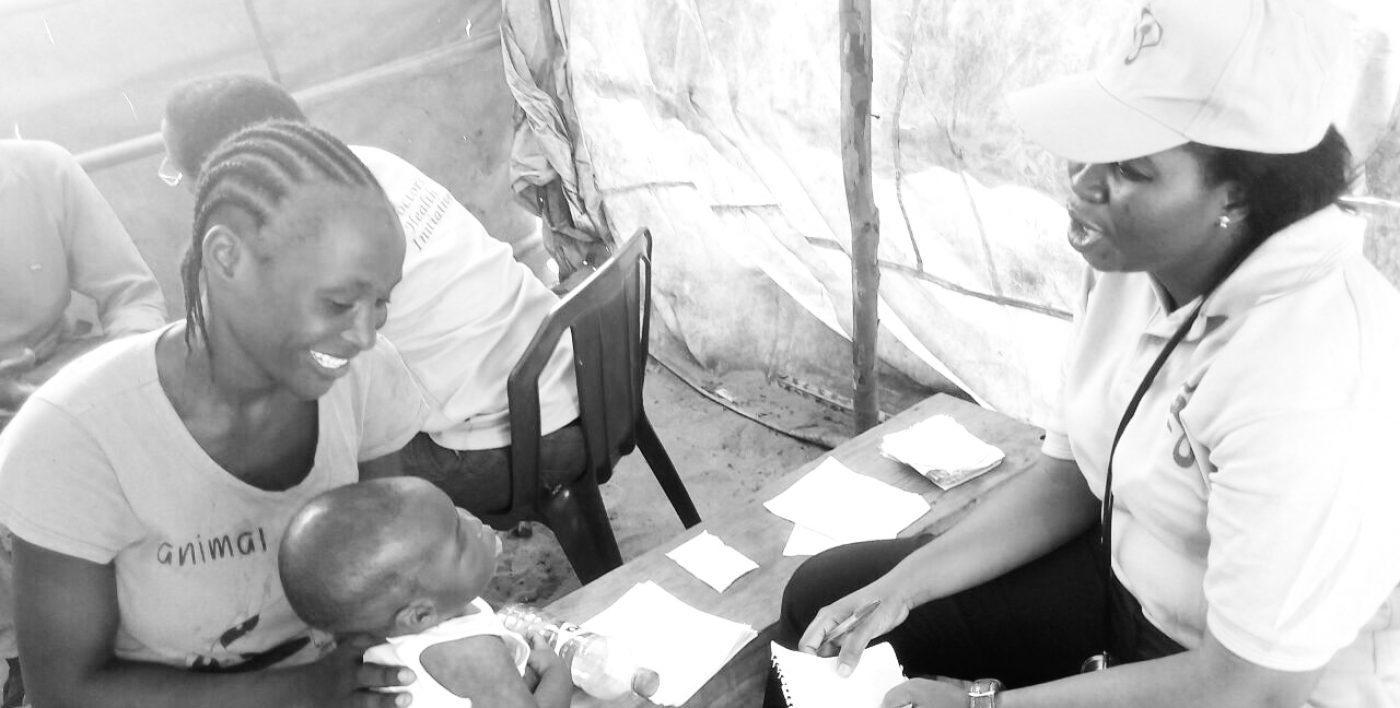
At the camp, we were received and cleared to enter the camp with the help of one of the Doctors Health Initiative (DHI) member Doctors who lives and works in Benin. I’d say that getting into the camp was the last moment of excitement on that trip for so many reasons, some of which are below.
· When we offloaded our materials, they simply disappeared because it was like we dropped a cup of water in the sea.
· The camp at the time had 2200 (Two Thousand, Two Hundred) inmates and a meal (not a day’s feeding need) was 10-12 bags of rice at the time.
· We met a number of German nationals helping out because they volunteered, got sponsored and flew down to this country to assist the IDPs with their time and skills.
· The camp was simply a bush with a few tents and cleared patches. I could not imagine at the time how they’d cope with the rainy season and flood.
· Several months of deprivation, malnutrition, pain, fear, forced migration and loss to mention a few, meant that as many as were sick did not have the means to buy primary medical care
· Even when the Doctors were there to offer free consultation and drugs, the sick needed an interpreter to describe their symptoms. In one instance a young girl of about 6 years who must have been receiving excellent education and with a bright future was the interpreter. This little girls didn’t know where her parents were but she was alive and helping others get medical treatment.
· The boys probably bled a rubber tree, left the rubber to coagulate after which they forced it into a circular shape and a soccer ball was in place. They played football and they were happy.
· A lot of the kids in the camp had lost their parents and were mapped to foster parents some of who had lost their own children just to create a family setting for the children to develop.
· Overall, I was stunned by the fact that in the “mess” they lived, they were still capable of happiness which came through in the form of genuine gestures of gratitude and generous doses of infectious smiles.
For most of the drive back to Lagos, I was lost in the contemplation of what I just witnessed.
Seeing how these brethren of ours coped with the circumstances our collective mistakes forced on them, I could not help but recall what Viktor Frankl wrote in Man’s Search for meaning. “Everything can be taken from a man but one thing: the last of the human freedoms—to choose one’s attitude in any given set of circumstances, to choose one’s own way.”
Clearly, the IDPs chose to remain happy and that begs the question; what have you chosen today? I urge you to choose to help because as Victor Frankl rightly asserted in the same book, “Being human always points, and is directed, to something, or someone, other than oneself—be it meaning to fulfill or another human being to encounter. The more one forgets himself—by giving himself to a cause to serve or another person to love—the more human he is and the more he actualizes himself. … What is called self-actualization is not an attainable aim at all, for the simple reason that the more one would strive for it, the more he would miss it. In other words, self-actualization is possible only as a side-effect of self-transcendence.” I understand this to mean that it is selflessness that gives meaning to our humanity.
Let us all therefore reach beyond ourselves, transcend ourselves today and become the leaven that will increase our individual and collective humanity. Every tear the IDPs shed at night while we slept is our tear, every pain they bear is our pain. Let us therefore help generously so we can share in every smile they share.
It is for these reasons that I felt that after I left that camp, I lost my rights to complain about anything.
*IDP: Internally Displaced Person
Written by Mr. Chidi Ileka


 Doctors health initiative