b l o g

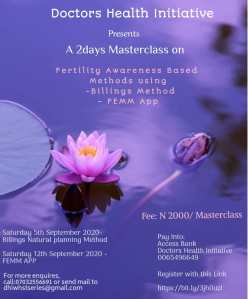
Our September Masterclass

If you have been attending Doctors Health Initiative’s weekly Zoom forum, then this may not be new to you but if you haven’t, you don’t want to miss out on our 2 day Masterclass on fertility awareness based methods. There’s 2 super exciting classes scheduled  for Saturday 5th September, 2020 and Saturday 12th September, 2020. Come ready to learn. Here’s the link for registration.


Are you in safe hands?

Hand washing has to be one of the most effective means of disease prevention that is grossly underrated. Many communicable diseases, especially those spread via direct contact, can be averted by this single act.

The world is in the middle of a pandemic. The novel Covid-19 virus has been ravaging the earth. It’s nearly six months down the line, and still one of our biggest arsenal against this invisible foe is hand washing.

Although, I’m sure we must have been hearing these since elementary (primary) school; this article would be incomplete without good reasons why we should wash our hands.

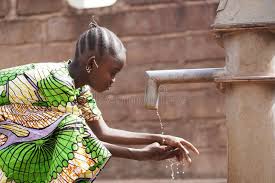
Girl handwashing

Germs are mostly ubiquitous. They can be picked up from anywhere and anything. Our hands, arguably of all the body parts are the most at risk for picking up germs and microbes. They touch so many surfaces throughout the course of the day, as well as other body parts like the face. Hence, they are capable of self-infection and spread of infections to other people. This can be done either by directly touching another person, or by transferring these germs to another surface. From here these germs could be picked up by a different individual. The burden of childhood illnesses (especially gastrointestinal) would be less, if only we taught our children proper hand washing. The world (Africa in particular) still battles antibiotic resistance. Antibiotics are prescribed for a lot of diarrhea illnesses, often times unnecessarily. Most of these diseases could have simply been avoided by proper hand washing.

Again, the ongoing pandemic must have exposed us to the proper hand washing techniques but it can’t be overemphasized. Also, whatever is worth doing, is worth doing well. So if we must wash our hands, we might as well just do it the proper way. The WHO has a beautiful pictorial description of the steps. Here they are listed out.

  • Wet hands with running water
  • Apply enough soap to cover all hand surfaces
  • Rub hands palm to palm
  • Scrub the back of your hands, between your fingers, don’t forget under your nails
  • Scrub for at least 20 seconds. You can hum the “happy birthday” song twice
  • Rinse under running water.
  • Dry hands with a towel or air dry.

Clean, running water with soap, although the preferred choice may not always be available. Alcohol based hand sanitizers that contain more than 60% alcohol can be used in lieu of hand washing.

Now we have seen yet again how we go about washing our hands, in what scenarios do we employ this?

  • Definitely after using the toilet or handling waste or garbage
  • Before, during and after preparation of meals
  • Before and after eating meals
  • After coughing, sneezing, blowing your nose
  • After playing with pets or animals
  • After returning from the market, handling money.
  • After caring for the sick, changing diapers.

There are many more, but start with these and you should be on track protecting yourself and your loved ones from deadly infectious diseases.

**Michael Imeh, a DHI volunteer writes from Lagos, Nigeria

….Of boredom, bitter leaf and brains

22.07.2020


Two news items prompted this post.

I was obviously bored. Lazily scrolling past previous Whatsapp messages on my phone, I came across an online video (I really don’t know how old it was) advertising bitter leaf capsules. Obviously, it wasn’t manufactured in Nigeria or anywhere near Africa. That Africans had for thousands of years used vernonia amygdalina  to maintain a healthy lifestyle; and that the ingredients for the capsule were obtained from the tropical regions of Africa, was graciously acknowledged. According to research, bitter leaf can prevent cancer, diabetes, arthritis, high blood pressure and heart attack. It can reduce bad cholesterol and is helpful in weight control.

Now while I have little love for ‘ofe olugbu’ (please don’t hate me and – yes, I am from that part of the world that uses an ‘L’, not an ‘N’ to spell it, so no apologies), I do wonder if it will be to my benefit to foster a good relationship with this herb (ugh…the bitterness though). I also cannot help but be baffled at how it seems virtually impossible for us to develop or promote or spotlight ‘our own’. ‘Olugbu’ has gone international and the hype did not come from us! A rather naughty friend of mine asked why his brothers/sisters in the East were still dying from diabetes and high blood pressure and cancer.

Another message on my phone reminded me that tomorrow is World Brain Day (never knew there was one) WBD certainly does not celebrate the brightest among us. Instead it has been set aside to increase public awareness and promote advocacy related to brain health. This year, it’s attention is on Parkinson’s Disease – a disease that affects brain function and movement; and is suffered by at least 7 million people in the world. Mohammed Ali struggling with words readily comes to my mind here.

Oh shucks, I guess I was too late in posting…….it’s World Brain Day already!

Ogonna Kanu, writes in from Lagos

AFTER THE BOMB

16.07.2020

I came across a poem that struck me the first time I read it as a 13 year old in J.S.S 3. It’s been many wars and many years since then but the poignancy of the author’s words still strike me any time I read it again.

After the bomb had fallen

After the last sad cry

When the earth was a burnt out cinder

Drifting across the sky


Came Lucifer, son of the morning

With his fallen angel ban

Silent and swift as a vulture

On a mountain top to stand


And he looked as he stood on the mountain

With his scarlet wings unfurled

At the charnel house of London

And the cities of the world


And he laughed…….

And in that mocking laughter

Across the heavens ran

He cried ‘Look’ to fallen angels

This is the work of man

who was created in the image of God!

– Mary Wilson


There are approximately 70.8 million persons in the world who are either refugees, internally displaced or stateless persons. Of these 25.9 million are under the age of 18. There are over 2 million internally displaced persons in Nigeria. The major causes of displacement around the world are wars and conflicts.

What exactly have we done to ourselves? To the world?


CELEBRATING WORLD REFUGEE DAY: JUNE 20TH 2020

21.06.2020

The UN marks World Refugee Day on June 20th annually in order to bring global attention to the plight and suffering of children, women and men who flee their homes under threats of persecution, conflict and violence; and celebrates their perseverance, determination and resilience. In celebration, Doctors Health Initiative (DHI) seeks to create awareness on internal displacement in Nigeria.


The internally displaced person in Nigeria faces various challenges:

  • The almost non-existent government attention given to IDPs translates literally to total self-dependence. Feeding ranks amongst the greatest challenge IDPs face. They lack the financial means to feed themselves and depend on government handouts and donations from individuals, organizations and NGOs.
  • There is no guarantee of safety for IDPs in the camps. They are still at the risk of attacks from armed militia or armed groups. Where there is violence in the areas surrounding the camp, it may be difficult for aid workers to get relief materials to the camp.
  • Female IDPs suffer the risk of sexual and gender based violence (SGBV). Attacks may lead to abduction and rape of women and girls. Females may place themselves in positions to be exploited in a bid to escape unbearable living conditions. In some cases, the fear of stigmatization and ignorance has prevented rape victims from resorting to legal redress.
  • Exploitation and abuse from host communities and the government. They occasionally face animosity from the host communities. Within the camp, factions created along religious or tribal lines which do not encourage harmonious interactions may exist. Officials are wont to exploit the lackadaisical attitude of government and make profit off materials and funds made available for the care of IDPs.
  • The living conditions in IDP camps are pathetic. The IDPs live in makeshift and unsuitable shelter constructed from either wood, zinc, bamboo, polythene or palm fronds or a combination of these materials. Some take shelter in schools, government buildings and uncompleted buildings; and those who manage to flee with a fair amount of money resort to renting apartments. They may lack the financial ability to renew their rent upon expiration. The shelters usually offer little protection from the elements of the weather.  Large families are oftentimes cramped into small spaces. Makeshift toilets and bathrooms are the norm and where there are not available, the surrounding bushes become restrooms. Waste evacuation is non-existent. Diseases are rife.
  • IDPs lack access to quality healthcare. The unsanitary conditions at camps and lack of medical attention aggravates sicknesses, the spread of diseases and epidemics. Where pregnant women and babies are denied pre-natal and ante-natal care, it is not unusual to record deaths of pregnant women at childbirth. Very few camps have inadequately equipped clinics. IDPs in unofficial camps or who may be living with relatives have not been taken into consideration.
  • For the IDPs sheltered in official camps, their freedom of movement is restricted. There are no unauthorized visits to the camp. Understandably, this may be government’s means of putting a check on excesses in camp, still yet, the limitation hampers IDPs ability to sufficiently fend for themselves bearing in mind that government’s assistance barely goes far.
  • IDPs are not offered psychosocial support. Many of them have undergone severe emotional trauma or distress. Memories such as being nearly hacked to death, witnessing the killing of a family member, the unexplained disappearance of friends or family members or just the struggle to adjust to life in the cities where they lack social safety nets can take a psychological toll that requires professional medical attention.(Matthew Mpoke Bigg)
  • Families may be separated whilst fleeing. There is presently, no family tracing system in the country to link IDPs with family members who may have been abducted or missing. Unaccompanied children run the risk of becoming permanent orphans. Missing or abducted persons may never be accounted for.
  • IDPs lack documentation. Most barely escape the violence in their communities, leaving their possessions behind; some others have had to leave because their houses or villages were burned down along with all their property; and a few others have their means of identification seized, stolen or missing whilst fleeing. Not having a means of identification could affect the IDP’s chances of getting a job and other benefits.
  • For IDP children, education may be halted for the period they remain displaced. In camps where there has been an effort to provide education, makeshift schools are built; children depend on charity organizations or NGOs for books and learning materials; and the teaching standards cannot neither be evaluated nor enforced.

IDPs will sometimes resort to harmful coping mechanisms for survival. Child labour, early or forced marriage, prostitution, drug abuse, poor nutrition, family separation, petty theft become necessary to survive.


A lot of work needs to be done to tackle these challenges. Government has to play a decisive role in solving the internal displacement dilemma. It needs to firmly tackle the security challenges in the country. Doing so will guarantee that at least half of the displacement issues in Nigeria will be solved. The Federal Ministry of Humanitarian Affairs, Ministry of the Environment, National Emergency Management Agency (NEMA) and other related agencies should take the lead in committing to understanding and employing early warning systems. These systems help to detect disasters. The benefit will be an elimination of the haphazard panic- infested solutions and instead strategic, co-ordinated measures taken by government. The formulation and employment of a line of action to help resettle IDPs and help them rebuild their lives is necessary. Government should work with stakeholders in employment, health, housing, education and other sectors to build a mechanism that makes it possible. Nutrition, healthcare, education and security at IDP camps nationwide are begging assessment and a genuine and conscientious effort to improve these conditions. A collaboration between government, NGOs and stakeholders to create awareness on the effects of harmful environmental practices will to an extent, help to curb environmental disasters in the country. The lack of media attention in Nigeria on internal displacement also downplays the magnitude of the problem. Heightened attention will increase awareness on the plight of IDPs and will force government to take some action and hopefully, give due attention to them. It will also increase support from well-meaning individuals and organizations.

With the staggering numbers and obviously growing menace of internal displacement, it is disconcerting that this issue is trivialized. These numbers are real. The persons affected are Nigerians and so are the challenges. Only a dedicated fight will solve the problem.

*This concludes the article


With donations from generous individuals and organizations, DHI has been organizing outreaches to internally displaced persons throughout the nation since 2008. We give foodstuff, essential materials and free health consultations/services during these outreaches. We are constantly in need of donations and volunteers. Would you please join us? Contact details: 0703 255 6691 or 0803 752 5616.  For donations – Access Bank, account no. 006 549 6649, account name – Doctors Health Initiative. Visit us at www.dhicares.blog to learn more about what we do.


**Ogonna Kanu, a DHI volunteer, writes from Lagos, Nigeria
 

CELEBRATING WORLD REFUGEE DAY: JUNE 20TH 2020

20.06.2020

The UN marks World Refugee Day on June 20th annually in order to bring global attention to the plight and suffering of children, women and men who flee their homes under threats of persecution, conflict and violence; and celebrates their perseverance, determination and resilience. In celebration, Doctors Health Initiative (DHI) seeks to create awareness on internal displacement in Nigeria.


Of the 40million IDPs in the world, 12.5million are in Africa and Nigeria accounts for 2million! Between January and June 2020, The Internal Displacement Monitoring Centre’s (IDMC) data collated from research efforts of different organizations revealed 28,542 fresh cases of internal displacements in Nigeria. In 2019, the African Union’s bid to find long-term solutions to Africa’s displacement dilemma led to the declaration of 2019 as ‘The Year of Refugees, Returnees and Internally Displaced Persons.’ An IOM/UN Migration Agency study of the 6 states mostly affected by insurgency in the North uncovered the existence of 1,918,508 IDPs in that region. 79% of the IDP population were women and children. In December 2019, the same study revealed 2,039,092 IDPs in the same region with 80% being women and children. The 6 states where the research was carried out were Adamawa, Bauchi, Borno, Gombe, Taraba and Yobe. Borno state in both years hosted 75% of all IDPs in the region.


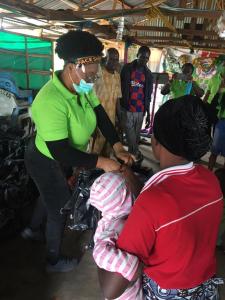
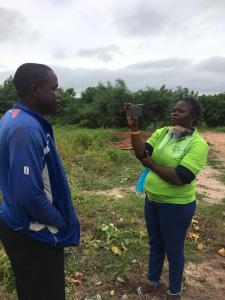
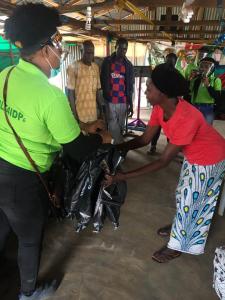
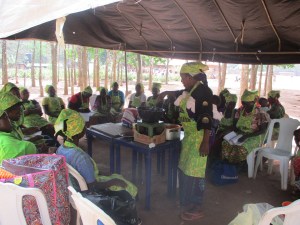
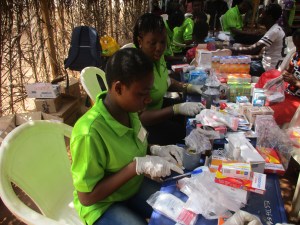
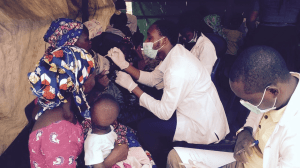
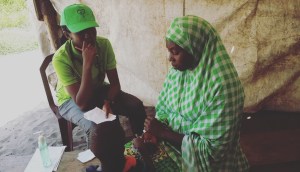
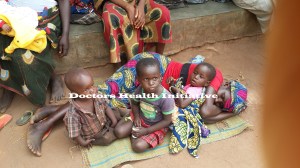
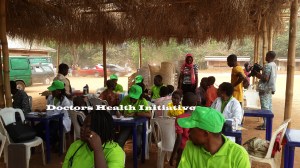
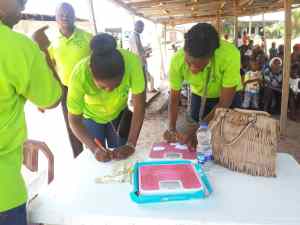
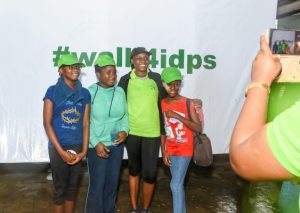
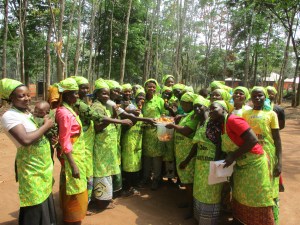
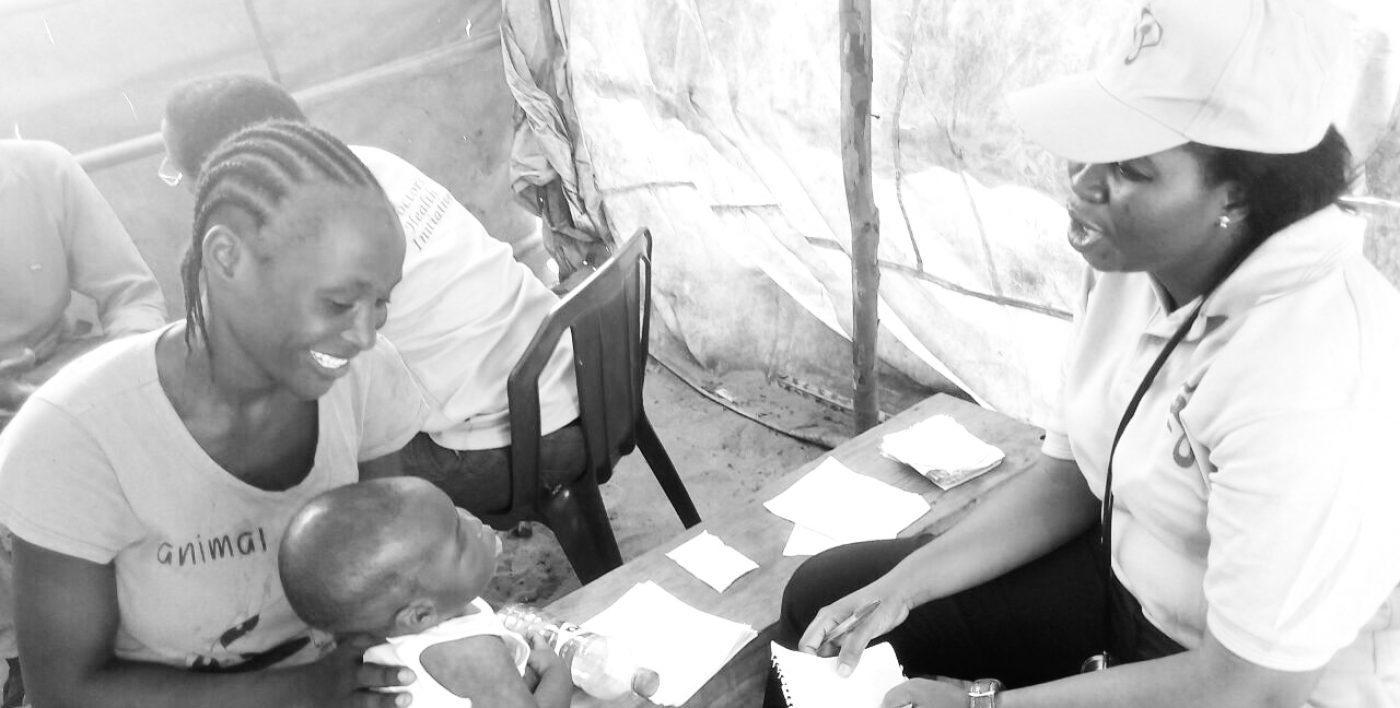
Photos of IDP activities in various states over the years – providing health services; training female IDPs in Benin City; IDP Walkathon in Lagos.

IDPs in Nigeria are easily identified as people who have had to leave their villages and towns for fear of insurgency; those who have been forced out of their houses by the effects of erosion, flooding, drought, famine etc; people who have lost their homes to government’s demolition exercises; and communities plagued by pollution and whose inhabitants are compelled to seek safer environments in order to stay healthy and source for livelihood. The squatters in an uncompleted building at the end of the street who had to move when the local government built a set of lock up shops in that space; the family in the swampy part of a yet to be developed area whose wooden shelter got submerged by heavy rain; and the couple staying temporarily with family members because their home was razed down during a communal clash are all IDPs. These persons have become so much part of our everyday lives that we are unaware that they should be categorized as internal displaced persons who are owed a duty by government.

COVID-19: Doctors Donate Palliatives To IDP Camp In Lagos

*To be concluded


With donations from generous individuals and organizations, DHI has been organizing outreaches to internally displaced persons throughout the nation since 2008. We give foodstuff, essential materials and free health consultations/services during these outreaches. We are constantly in need of donations and volunteers. Would you please join us? Contact details: 0703 255 6691 or 0803 752 5616.  For donations – Access Bank, account no. 006 549 6649, account name – Doctors Health Initiative. Visit us at www.dhicares.blog to learn more about what we do.


**Ogonna Kanu, a DHI volunteer, writes from Lagos, Nigeria


CELEBRATING WORLD REFUGEE DAY: JUNE 20TH 2020


19.06.2020

The UN marks World Refugee Day on June 20th annually in order to bring global attention to the plight and suffering of children, women and men who flee their homes under threats of persecution, conflict and violence; and celebrates their perseverance, determination and resilience. In celebration, Doctors Health Initiative (DHI) seeks to create awareness on internal displacement in Nigeria.


The word refuge comes from the French word meaning ‘hiding place.’ It can be traced to the Latin word, fugere meaning ‘to flee’ and refugium meaning ‘a taking of refuge or a place to flee back to.’ To seek refuge is to look for a safe place or a safe haven. Safety is the key word here. We generally speak of refugees as people fleeing an unsafe environment in search of safety. However, the UN defines them as forcibly displaced persons. A 2018 Office of the High Commissioner for Human Rights report presents an interesting definition: “those who are forced to move, within or across borders due to armed conflict, persecution, terrorism, human rights violations and abuses, violence, the adverse effects of climate change, natural disasters, development projects or a combination of these factors”. It further categorizes forcibly displaced persons as asylum seekers, refugees, internally displaced persons and stateless persons. As at today, there are 70.8million forcibly displaced people in the world. Of these, 3.1million are asylum seekers, 25.9million are refugees and 40million are internally displaced persons.

The terms asylum seeker and refugee have become somewhat confusing. A refugee is “someone who is unable or unwilling to return to their country of origin owing to a well-founded fear of being persecuted for reasons of race, religion, nationality, membership of a particular social group or political opinion.” Asylum seekers and refugees flee for safety. A refugee’s status is determined by these four main elements: (i) well-founded fear (ii) persecution (iii) reasons of race, religion, nationality, membership in a particular social group or political party and (iv)not within national borders. An asylum seeker is an intending refugee, whose request for asylum may be turned down if it is determined that his or her circumstances does not meet the criteria outlined above. At the end of 2018, 15.9million refugees (78%) were in protracted displacement situations, meaning they remained displaced for years! 10.1million had been in this situation for less than 20years while 5.8million had been displaced for more than 20years!

Internally displaced persons (IDPs) are “persons or groups of persons who have been forced or obliged to flee or to leave their homes or places of habitual residence, in particular as a result of or in order to avoid the effects of armed conflict, situations of generalized violence, violations of human rights or natural or human-made disasters, and who have not crossed an internationally recognized border.” Once an IDP crosses national borders, he or she becomes a refugee. In contrast to refugees, it is the duty of the IDP’s government to ensure that his/her rights as a citizen of the country are upheld. The UN and international organizations only play a complementary role.

*To be concluded


With donations from generous individuals and organizations, DHI has been organizing outreaches to displaced persons throughout the nation since 2008. We give foodstuff, essential materials and free health consultations/services during these outreaches. We are constantly in need of donations and volunteers. Would you please join us? Contact details: 0703 255 6691 or 0803 752 5616.  For donations – Access Bank, account no. 006 549 6649, account name – Doctors Health Initiative. Visit us at www.dhicares.blog to learn more about what we do.


**Ogonna Kanu, a DHI volunteer, writes from Lagos, Nigeria
 

Do you know that there are 40 million internally displaced persons in the world and 12.5 million of them can be found in Africa? ……..and Nigeria accounts for 2 million internally displaced persons?

Who are internally displaced persons or IDPs?

Check right here tomorrow to find out

Who are refugees? Where they are? What challenges do they suffer? World Refugee Day is right around the corner and as we count down to D day, DHI shall be dishing out interesting bits of information to keep you informed.  We start with these 5 powerful refugee movies on netflix recommended by humanrightscareers.com:

  1. Human Flow (2017)
  2. First They Killed My Father (2017)
  3. Beasts of No Nation (2015)
  4. Born in Syria (2016)
  5. Refugee (2016)

Please do write in and tell us your favourite! Happy watching!!!!!